 |
HONG KONG HIKERS CLUB |
Welcome to the Hong Kong Hikers Club!
A community platform for people who enjoy hiking, exploring nature and connecting with fellow outdoor enthusiasts in Hong Kong.
Posted by Daniel Kohler on 12.04.2026 View Image Gallery
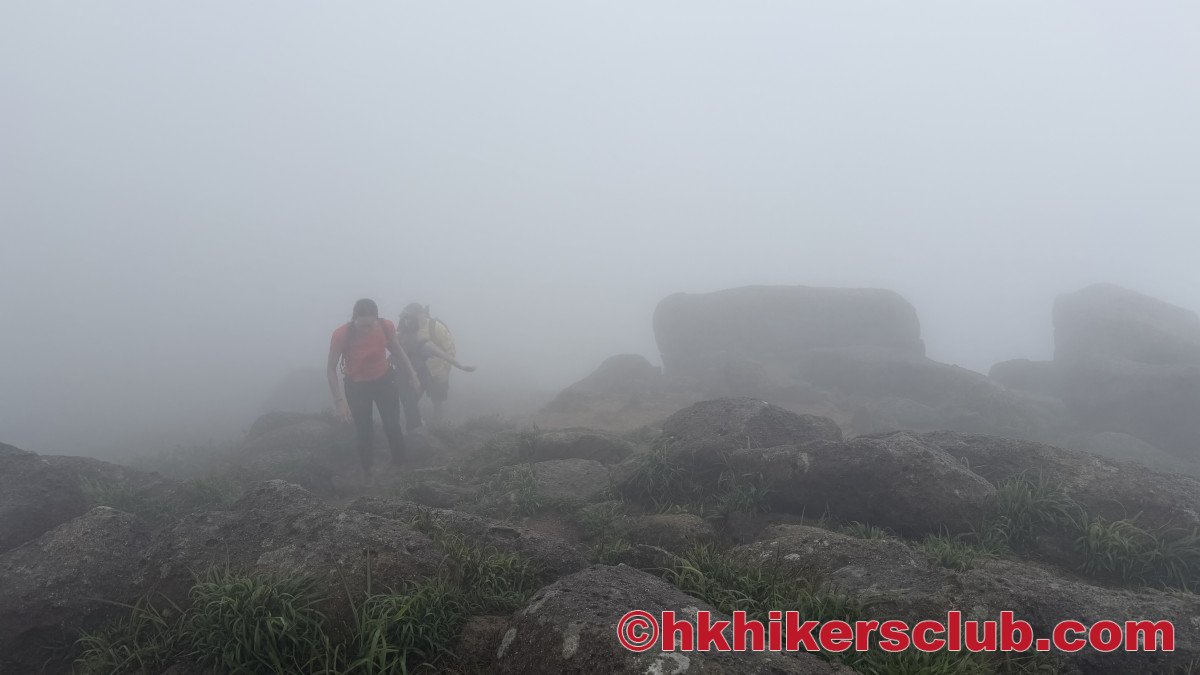
We met on a grey Saturday morning at Tung Chung MTR, the familiar buzz of the station softened by the low ceiling of clouds hanging over Lantau Island. Packs were checked, and greetings exchanged - those small rituals that mark the beginning of a shared hike. The weather forecast had promised clouds and occasional light rain, and it delivered exactly that. Visibility was limited to less than 20 meters, giving the day a quiet, inward-looking mood before we’d even set foot on the trail.
From Tung Chung, we boarded the bus to Pak Kung Au, watching the urban edges fade into misted hillsides. The ride itself set the tone: winding roads, damp windows, and fleeting glimpses of green slopes vanishing into cloud.
The Ascent from Pak Kung Au
Pak Kung Au is usually a place of wide views - Lantau Peak to one side, Sunset Peak to the other - but today it felt enclosed, almost secret. The trailhead rose gently at first before committing to a steady climb. Grass glistened with moisture, and stone steps were darkened by rain, demanding careful footing.
As we climbed, the world narrowed to what lay immediately ahead: the trail, the boots in front of us, and the quiet rhythm of breathing and walking. With visibility so low, distances felt shorter and longer at the same time - short because there was nothing beyond the immediate slope, and long because progress had to be measured step by step.
Occasionally, the cloud would thin for a moment, hinting at space beyond - just enough to remind us where we were. The silvergrass near the upper slopes, usually a highlight of Sunset Peak, appeared and disappeared like ghosts, their pale tops dissolving into the mist. The light rain came and went, never heavy enough to stop us but persistent enough to keep everything cool and damp.
Reaching Sunset Peak
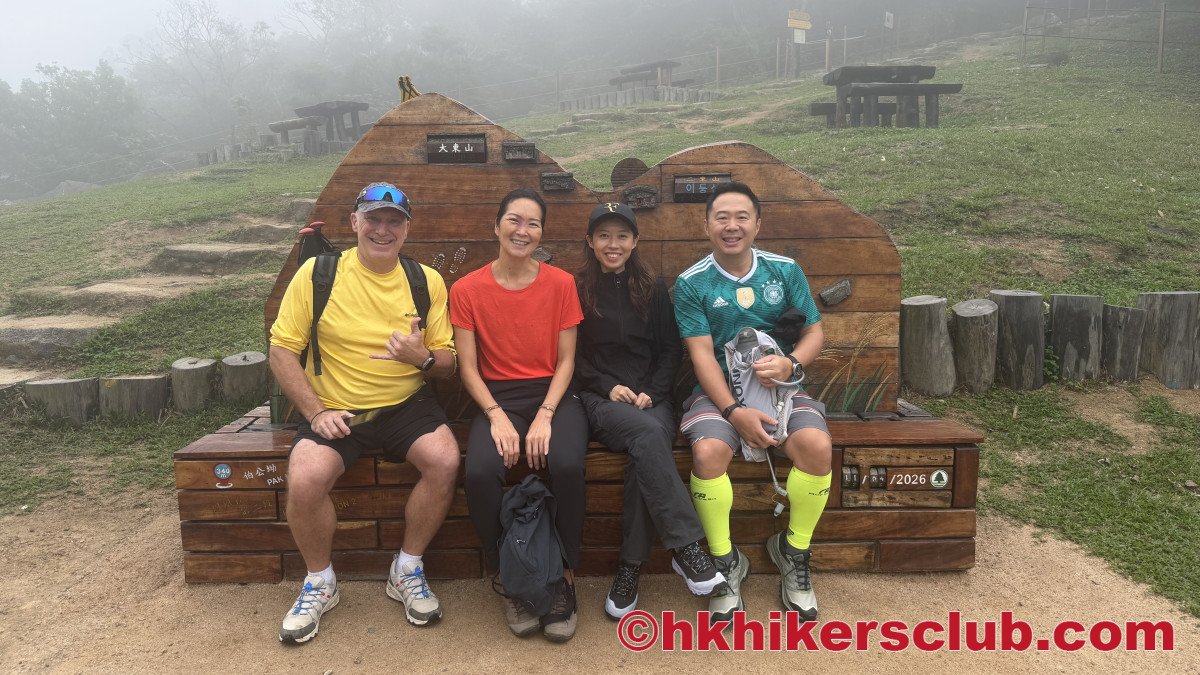
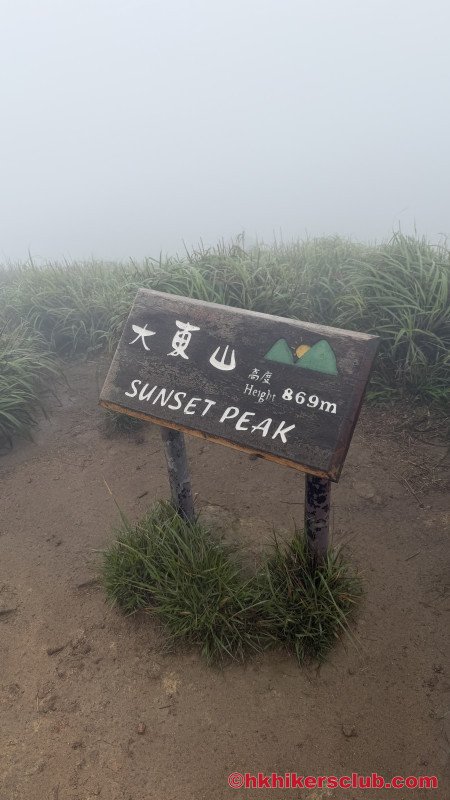
At the summit of Sunset Peak, there was no dramatic reveal - no sweeping panorama, no distant sea. Instead, there was a quiet, muted arrival. The summit marker stood surrounded by whiteness, as if floating in air. It wasn’t disappointing; it was simply different.
We paused for a short break, took some pictures, congratulated each other to have made it to the peak, before we started our decent to Mui Wo. There was a sense of calm up there, a feeling that the mountain was letting us see it on its own terms.
The Long Descent to Mui Wo
The descent toward Mui Wo began gently, following the trail along rolling slopes before dropping more decisively toward the coast. The path felt softer here, cushioned by wet earth and grass, winding past scattered boulders and weathered terrain.
As we lost altitude, the clouds began to lift slightly. Shapes gained definition, and the grey started to carry hints of green and brown. The rain eased, returning to a thin mist, and conversation picked up as legs loosened into the downhill rhythm.
Bit by bit, the signs of Mui Wo appeared - distant sounds, clearer air, and finally the outlines of buildings near the bay. After hours in near-whiteout conditions, the re-entry into the village felt almost abrupt.
Ending by the Sea
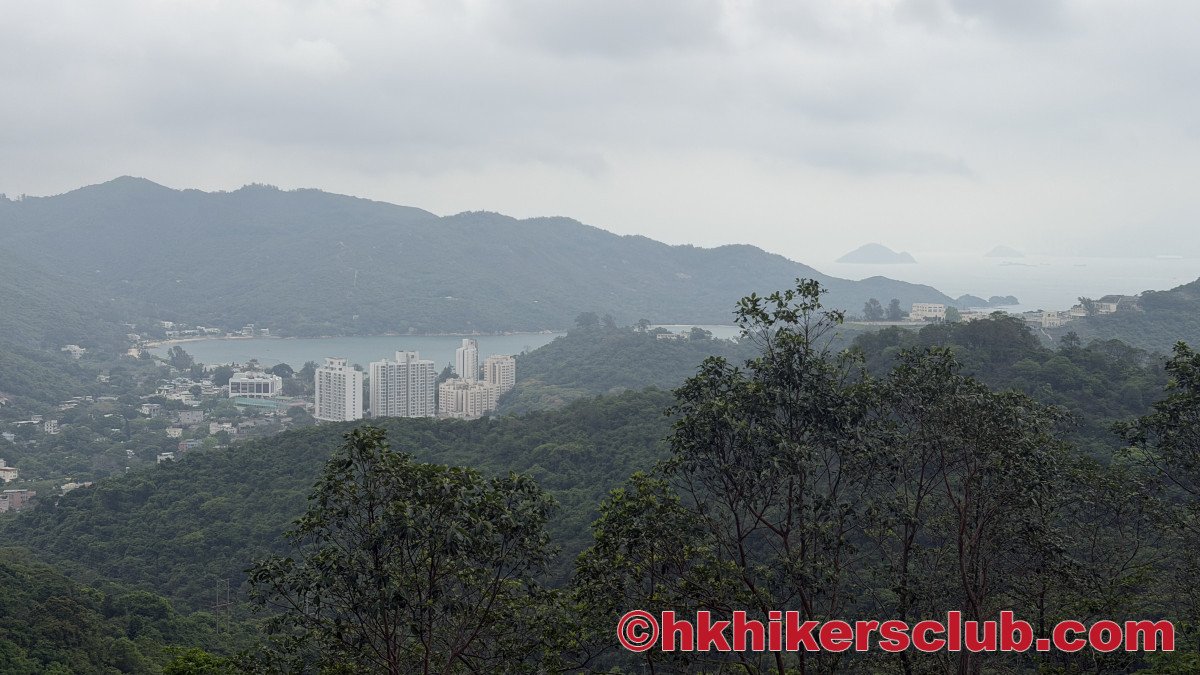
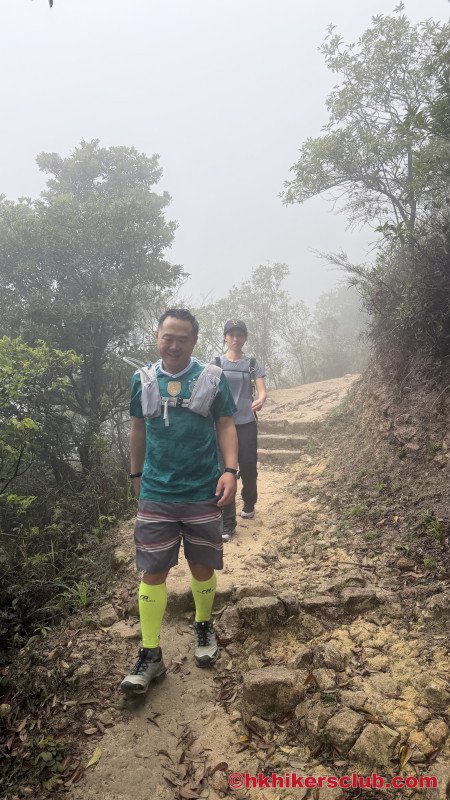
We reached Mui Wo tired but content, boots damp, clothes lightly speckled with rain. It wasn’t a hike defined by views or dramatic weather, but by atmosphere - a shared movement through mist, patience on the trail, and the quiet satisfaction of crossing a mountain despite what the day withheld.
Some hikes impress you with what they show. This one stayed with me for what it didn’t - and for the way it made us slow down, narrow our focus, and simply walk together from one side of Lantau to the other.